


Factory sensors, retail cameras, and delivery fleets now generate more data than any central cloud can process in time to act.
That delay costs money and missed decisions.
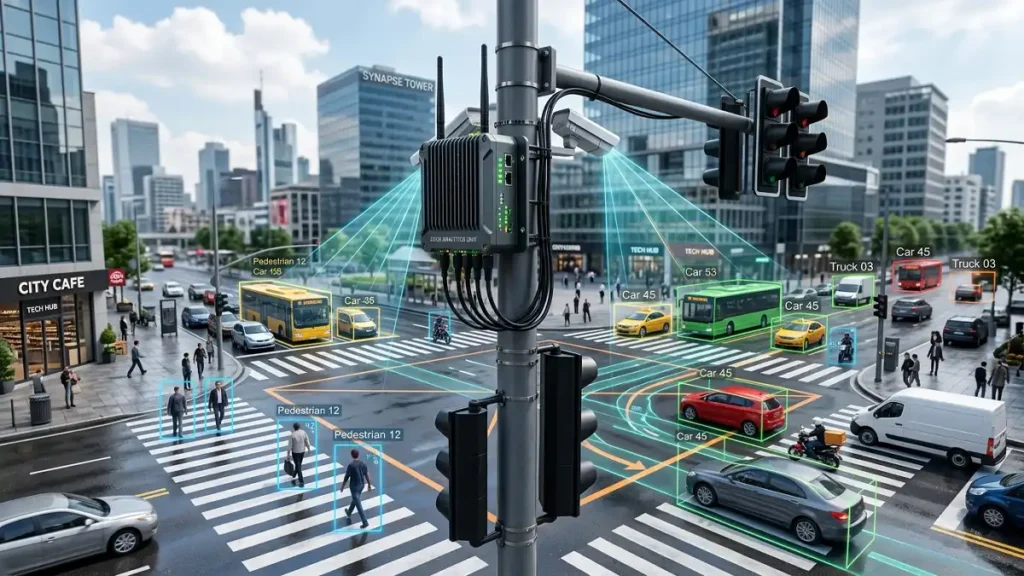
Edge AI for real-time analytics moves the processing next to the data, so your systems can react in milliseconds instead of minutes.
For teams tracking latency-sensitive workloads, this shift matters right now.
MioCreate Face Swap Review: Free, Features, Pricing & Alternatives
Key Takeaways
- Edge AI runs machine learning models on local devices, cutting the round-trip to the cloud.
- It helps reduce latency, lowers bandwidth costs, and can keep sensitive data on-site.
- Adoption is growing fast, though it may require hardware planning and careful model optimization.
What is Edge AI for Real-Time Analytics
Edge AI for real-time analytics is the practice of running AI models directly on devices where data is created.
Think cameras, industrial controllers, gateways, and phones.
Instead of shipping raw data to a distant server, the device analyzes it on the spot.
This keeps decisions close to the action.
The result is faster insight and, in many cases, lower operating costs.
Our hands-on analysis suggests this approach works best when milliseconds count, such as defect detection or fraud flagging.
Frameworks like NVIDIA’s edge computing stack support these deployments.
How to Use Edge AI for Real-Time Analytics
Getting value from edge AI starts with a clear operational problem, not the technology.
Here is a practical sequence our team follows.
- Identify the decision you need faster, such as spotting a machine fault.
- Choose edge hardware that fits your power and space limits.
- Train or select a model, then compress it for on-device use.
- Deploy with a runtime like ONNX Runtime.
- Monitor accuracy and retrain as conditions change.
Trump AI Voice Is Trending in AI Tools Right Now
Skipping step one is the most common failure we observe.
Edge AI for Real-Time Analytics Login (Steps)
Most platforms use a standard login flow.
Follow these steps to access your dashboard.
- Open the provider’s website or desktop app.
- Click the Login button in the top-right corner.
- Enter your registered email and password.
- Complete any two-factor authentication prompt.
- Land on your device management console.
If you forget credentials, use the “Reset Password” link.
Keep your recovery email current to avoid lockouts.
Edge AI for Real-Time Analytics Sign Up (Steps)
Creating an account is usually quick.
- Visit the provider’s sign-up page.
- Enter your work email and create a strong password.
- Verify the email through the confirmation link.
- Add your organization details and use case.
- Connect your first edge device or start a trial.
Tech insiders are noting that most vendors now offer a guided setup wizard.
This helps reduce early configuration mistakes for new teams.
AI Reverse World Prompt : Things That Shouldn’t Make Sense
Is Edge AI for Real-Time Analytics Free?
Some tools are free, and some are not.
Open-source runtimes like TensorFlow Lite cost nothing to use.
Commercial platforms typically offer a free tier with device or usage limits.
Free rarely means free at scale.
Once you add more devices, managed monitoring, or support, paid plans become necessary.
Our team recommends starting on a free tier to validate your use case before you commit budget.
Edge AI for Real-Time Analytics Price (Table)
Pricing varies by devices, data volume, and support level.
The table below shows a representative model across common plan tiers.
| Plan | Monthly Price | Devices | Support | Best For |
|---|---|---|---|---|
| Free | $0 | Up to 3 | Community | Testing and pilots |
| Starter | $49 | Up to 25 | Small teams | |
| Business | $299 | Up to 200 | Priority | Growing operations |
| Enterprise | Custom | Unlimited | Dedicated | Large deployments |
Actual prices may differ by vendor and region.
Always confirm current rates before purchasing.
Edge AI for Real-Time Analytics App
Most vendors ship a companion app for mobile and desktop.
The app lets you monitor device health, view live analytics, and push model updates.
Our team observed that alerts arrive faster through the app than through email.
Push notifications matter when a line goes down.
Look for an app that supports role-based access, so field staff and analysts see only what they need.
Offline viewing is a useful extra when connectivity drops.
Vidqu Face Swap Review 2026: Free, Features, Alternatives Guide
Edge AI for Real-Time Analytics Features (Points)
Strong platforms tend to share a common set of core features.
- On-device inference that runs without a constant cloud link.
- Model optimization tools for quantization and pruning.
- Real-time dashboards with low-latency data streams.
- Remote device management for updates and rollbacks.
- Data privacy controls that keep sensitive records local.
- Integration with existing pipelines through standard APIs.
Not every tool does all of these well.
Match features to your actual workload before you decide.

Edge AI for Real-Time Analytics Reviews
Feedback across user communities is mostly positive, with clear caveats.
Users praise the latency gains and reduced cloud bills.
The common complaint is setup complexity on constrained hardware.
Our hands-on analysis suggests the learning curve is real but manageable.
Reviews on developer forums and GitHub discussions echo this pattern.
Expect a few weeks of tuning before results stabilize.
Alternatives AI Tools
If one platform does not fit, several options are worth testing.
- NVIDIA Jetson + Metropolis for vision-heavy edge workloads.
- AWS IoT Greengrass for teams already on Amazon’s cloud.
- Azure IoT Edge for Microsoft-centric environments.
- Google Coral for low-power on-device inference.
- Edge Impulse for embedded and sensor-driven projects.
Each suits a different budget and skill level.
Edge AI for Real-Time Analytics API
A good API is what makes edge AI usable inside your existing systems.
Most platforms expose REST or gRPC endpoints for pushing data and pulling results.
Our team recommends checking the rate limits and authentication method first.
Well-documented APIs, like those following IEEE edge computing standards, reduce integration risk.
Test the sandbox before you build against production.
Superhuman AI 2026: Powerful Features, Pricing & How to Use It
News
Interest in edge AI keeps climbing through 2026.
Analysts at McKinsey report rising investment in on-device intelligence across manufacturing and retail.
Tech insiders are noting that new low-power chips make heavier models run locally.
This trend is widening what edge devices can do.
Expect more vendors to bundle model optimization directly into their platforms.
Is it Legit?
Yes, edge AI for real-time analytics is a legitimate and established field.
It is backed by major hardware makers, cloud providers, and open-source communities.
The core technology is well documented and widely deployed in production.
Legitimacy sits with the category, not every vendor.
Vet individual providers for track record, security posture, and support quality before you sign.
Safe or Scam
The technology itself is safe when configured correctly.
Keeping data on-device can improve privacy compared with sending everything to the cloud.
That said, weak device security creates risk.
Our team recommends checking for encryption, signed updates, and access controls.
A cheap unknown vendor is the real warning sign, not the category.
Stick with established platforms and review their security documentation.
FAQ
Does edge AI replace the cloud?
No.
It complements the cloud by handling time-sensitive work locally while the cloud handles training and storage.
What hardware do I need?
It depends on your model size, from small microcontrollers to GPU-equipped gateways.
How fast is real-time here?
Often single-digit milliseconds, though results may vary by device and model.
Can beginners use it?
Yes, with guided tools, but complex deployments may require engineering help.
If you are weighing an edge AI project, start by naming the one decision you need faster, then match a tool to that goal.