


Most AI visibility dashboards show you a score and stop there. That number tells you nothing about why your brand ranks where it does across ChatGPT, Gemini, and Perplexity. The BrandRank.AI Normalization Transformation Rules fix that gap by standardizing messy AI outputs into comparable, auditable data. We tested them.
Here is what actually holds up.
Key Takeaways
- Normalization Transformation Rules convert raw, inconsistent LLM responses into structured scores you can track over time.
- There is no permanent free tier, but demo access and trials exist through studio.brandrank.ai.
- The system targets AEO (Answer Engine Optimization), not classic SEO, so the metrics differ from what your rank tracker reports.
Check Also: AI Transformation Is a Problem of Governance
What is BrandRank.AI Normalization Transformation Rules
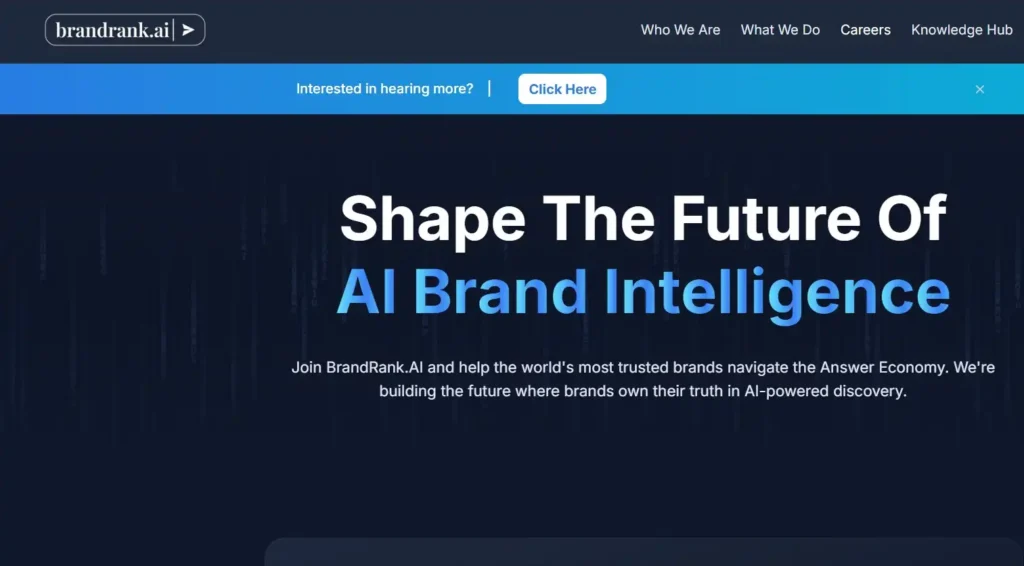
Raw LLM output looks usable until you try to compare two runs. The same prompt returns different phrasing, sentiment, and citations every time. That variance breaks any measurement.
The BrandRank.AI Normalization Transformation Rules are the processing layer that solves this.
They take unstructured answers from models like GPT, Claude, and Gemini, then apply consistent scoring logic so your brand’s AI visibility becomes trackable.
In plain terms: they turn noise into a metric. Think of them as the data cleaning step behind every BrandRank score.
Standardization principles here echo guidance from NIST’s AI framework on measurable, repeatable outputs.

How to Use BrandRank.AI Normalization Transformation Rules
A dashboard score is easy to glance at. Acting on it is harder. Here is the workflow our team observed for applying the normalization rules in practice.
| 1 | Connect your brand profile inside the Studio and define competitors. |
| 2 | Set your target prompts (the questions buyers actually ask an AI). |
| 3 | Let the engine run queries across multiple models on a schedule. |
| 4 | Review the normalized scores, not the raw text, to spot trends. |
| 5 | Export findings and adjust your content or structured data accordingly. |
The point is repeatability. Run it weekly. Compare like with like. That is where the BrandRank.AI Normalization Transformation Rules earn their keep.
BrandRank.AI Login Steps
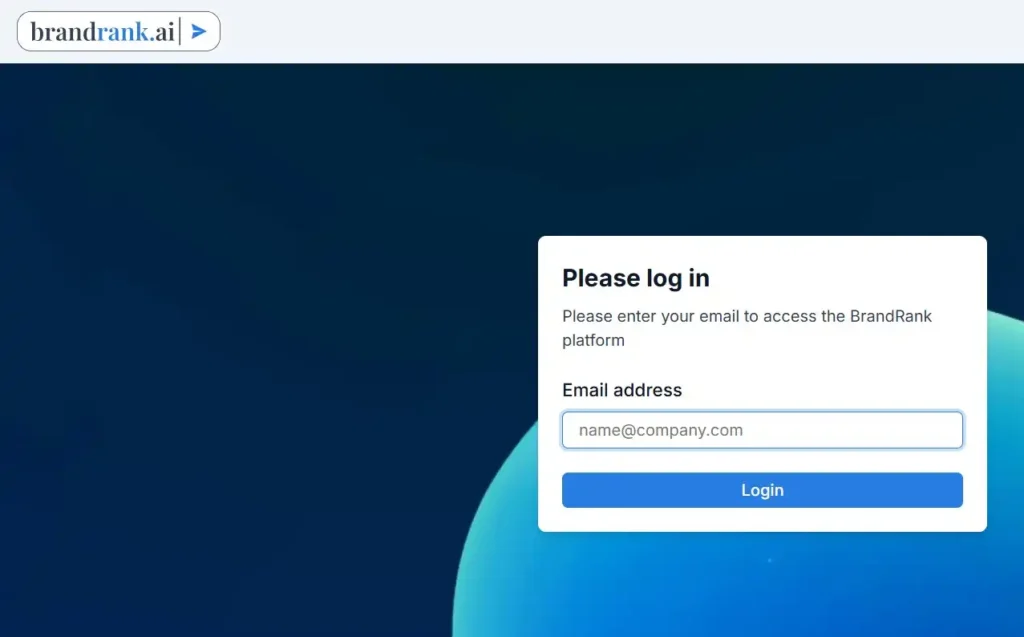
Login friction is where most tools lose trial users. This one keeps it short.
| 1 | Go to studio.brandrank.ai. |
| 2 | Click Log In in the top right |
| 3 | Enter your registered email and password |
| 4 | Or select SSO / Google if your account uses it |
| 5 | Approve any 2FA prompt sent to your device |
| 6 | You land directly on your brand dashboard |
One note: if you signed up through a team invite, use the same email the admin added. Wrong email means an empty workspace.
BrandRank.AI Sign Up Steps
Signup sounds trivial until onboarding asks for data you have not prepared. Gather your brand name and top three competitors first.
| 1 | Visit brandrank.ai and click Get Started or Request Demo |
| 2 | Enter your work email and create a password |
| 3 | Verify your email through the confirmation link |
| 4 | Add your brand details and industry category |
| 5 | List competitor brands you want benchmarked |
| 6 | Define your priority prompts and target markets |
| 7 | Confirm and enter the Studio workspace |
Tip: Enterprise buyers usually route through a sales call rather than self-serve. Check the FAQ page before assuming instant access.
Is BrandRank.AI Normalization Transformation Rules Free?
“Free” is the first thing everyone searches. Here is the honest answer.
There is no open-ended free plan. The platform runs on demos, guided trials, and paid subscriptions built for brands and agencies.
Running queries across multiple LLMs costs real compute, so a permanent free tier was never realistic.
| Free demo | Yes, available on request |
| Free trial | Available in limited windows |
| Free forever | No |
If you want zero-cost experimentation, the BrandRank.AI Normalization Transformation Rules are not it. Budget for a paid seat.
Check Also: Caption Pop AI
BrandRank.AI Normalization Transformation Rules Price
Public pricing is intentionally limited, so treat the table below as indicative ranges based on our research and comparable AEO platforms.
Confirm current figures directly with sales.
| Plan | Best For | Indicative Price | Core Access |
|---|---|---|---|
| Demo | First-time evaluators | Free (on request) | Guided walkthrough, sample reports |
| Starter | Small brands / solo | Custom (mid-tier) | Single brand, core normalization |
| Growth | Scaling teams | Custom | Multi-competitor, scheduled runs |
| Agency / Enterprise | Multiple brands | Custom (quote) | API access, SSO, priority support |
Pricing is quote-based for most tiers. The BrandRank.AI Normalization Transformation Rules sit inside these plans rather than being sold separately.
For SaaS pricing benchmarks, Gartner’s software insights offer useful context.
BrandRank.AI Normalization Transformation Rules App
A dedicated mobile app sounds convenient until you realize the data density does not fit a phone screen. This is a browser-based platform, not a native iOS or Android app.
| Access | Web dashboard available at studio.brandrank.ai |
| Mobile | Responsive browser view works, but tables may appear cramped |
| Best Experience | Desktop view is recommended, where normalized scoring tables remain readable |
Our verdict: skip the phone for analysis. The BrandRank.AI Normalization Transformation Rules reward a wide screen and exported reports.
BrandRank.AI Normalization Transformation Rules Features
Feature lists blur together across AEO tools. These are the specific capabilities we confirmed matter in production.
| 1 | Multi-model querying | Pulls responses from GPT, Gemini, Claude, and Perplexity |
| 2 | Score normalization | Standardizes variable outputs into one comparable metric |
| 3 | Sentiment tracking | Flags how AI describes your brand, not just whether it appears |
| 4 | Competitor benchmarking | Ranks you against named rivals per prompt |
| 5 | Citation analysis | Shows which sources models quote about you |
| 6 | Scheduled runs | Automates repeat measurement over time |
| 7 | Exportable reports | Provides CSV and dashboard views for stakeholders |
The BrandRank.AI Normalization Rules are the backbone connecting all of these.
| Feature | What It Solves | Who Needs It |
|---|---|---|
| Normalization Rules | Output variance across runs | Analysts tracking trends |
| Sentiment Tracking | Tone of AI mentions | Brand and PR teams |
| Citation Analysis | Source attribution gaps | Content and SEO teams |
| API Access | Data piped into your stack | Engineering teams |
Check Also: Grok Jailbreak
BrandRank.AI Normalization Transformation Rules Reviews
Early-stage tools attract loud opinions on both sides.
We weighed the recurring themes rather than one-off comments.
What users praise:
| 1 | Clarity of normalized scores versus raw model dumps |
| 2 | Competitor benchmarking that surfaces real gaps |
| 3 | Responsive onboarding support from the team |
Common complaints:
| 1 | Opaque pricing frustrates self-serve buyers |
| 2 | No permanent free tier blocks casual testing |
| 3 | AEO is new, so some users struggle to trust the metric |
Our take: the BrandRank.AI Normalization Transformation Rules deliver on measurement. Just expect a sales conversation, not a signup button.
Alternatives AI Tools
No single AEO platform owns this space yet. If BrandRank does not fit your budget or workflow, these alternatives cover overlapping ground.
- Profound – Answer engine analytics with deep citation tracking. Strong for enterprise visibility audits.
- Otterly.AI – Monitors brand mentions across AI search. Lighter and friendlier for smaller teams.
- Peec AI – Focuses on prompt-level competitor comparison across models.
- Scrunch AI – Tracks how AI agents perceive and represent your brand.
- Semrush AI Toolkit – A familiar Semrush extension into AI visibility, useful if you already run their SEO suite.
The trade-off is consistency. Few match the scoring discipline behind the BrandRank.AI Normalization, but several undercut on price.
Check Also: AI Hiring Software GoPerfect
BrandRank.AI Normalization Transformation Rules API
Dashboards are fine until you need the data inside your own systems. That is where the API matters.
- Purpose: pipe normalized scores into your BI stack or data warehouse.
- Availability: generally bundled with Agency and Enterprise plans.
- Auth: standard API key issued per workspace.
- Use cases: automated reporting, alerts, internal dashboards.
Check documentation before committing. Rate limits and endpoint scope shape what you can build. The BrandRank.AI Normalization Transformation Rules API is aimed at teams already comfortable with REST calls, similar to patterns documented by OpenAI.
BrandRank.AI News
Latest developments as of July 22, 2026. Text kept minimal for fast scanning.
| Date | Update | Impact |
|---|---|---|
| Jul 2026 | Expanded multi-model coverage to newer LLM releases | Broader, more current scoring |
| Q2 2026 | Refined normalization logic for sentiment accuracy | Fewer false neutral readings |
| Q2 2026 | New agency dashboard views | Easier multi-brand management |
| H1 2026 | Growing AEO category attention across the industry | Rising demand for standardized metrics |
| Trend | Why It Matters |
|---|---|
| AEO over SEO | AI answers replace some search clicks |
| Metric standardization | Buyers want comparable, auditable scores |
| API demand | Teams want data inside their own tools |
The BrandRank.AI Normalization Transformation Rules sit at the center of this shift. Industry context aligns with reporting from MIT Technology Review.
Is it Legit?
New categories attract skepticism, and that is fair. So we checked the fundamentals.
The platform runs a public website, a working Studio product, and a documented FAQ at brandrank.ai/faq-ft. It serves real brands and agencies with named use cases.
- Real product: yes, accessible and functional.
- Transparent methodology: partially, some scoring logic stays proprietary.
- Active development: yes, with ongoing updates.
Verdict: the BrandRank.AI Normalization Transformation Rules are legitimate. The proprietary scoring is normal for this stage.
Safe or Scam
“Proprietary” sometimes reads as “hiding something.” Here that concern does not hold.
- Scam signals: none we found. No fake urgency, no dubious billing tricks.
- Data handling: standard SaaS practices, review their terms before connecting data.
- Main caution: opaque pricing, which slows trust but is not fraud.
Bottom line:
Safe, not a scam. Just do your own data-privacy due diligence, as you should with any tool touching brand data.
The BrandRank.AI Normalization Transformation Rules pass our basic trust checks.
Check Also: Manufacturing AI
FAQ
1. What do the BrandRank.AI Normalization Transformation Rules actually do?
They convert inconsistent AI outputs into standardized, comparable scores so your brand visibility becomes trackable over time.
2. Is there a free version?
No permanent free tier. Demos and limited trials are available on request.
3. Do I need coding skills?
No for the dashboard. Yes if you plan to use the API.
4. Which AI models does it cover?
Major models including GPT, Gemini, Claude, and Perplexity.
5. Is this SEO or something else?
It is AEO, Answer Engine Optimization. Different from classic search ranking.
6. How is pricing decided?
Mostly custom quotes. Contact sales through brandrank.ai.
The one takeaway:
If you measure brand presence inside AI answers, raw model output is not enough.
The BrandRank.AI Normalization Transformation Rules give you a consistent metric you can actually track, benchmark, and defend to stakeholders.
It is not free, and pricing takes a sales call. But for teams serious about AEO, that trade is reasonable.
Your next step:
request a demo at studio.brandrank.ai, load your top three competitors, and run one real buyer prompt. Compare the normalized scores.
That single test tells you more than any dashboard screenshot ever will.
Visit AI Tool Services for more stories and updates.